Foraging for flowers with Fresh Cut Detroit
Model D followed Sarah Pappas, owner of Fresh Cut Detroit, during one of her flower foraging excursions and learned a great deal about Detroit's unique and varied collection of wild flora.
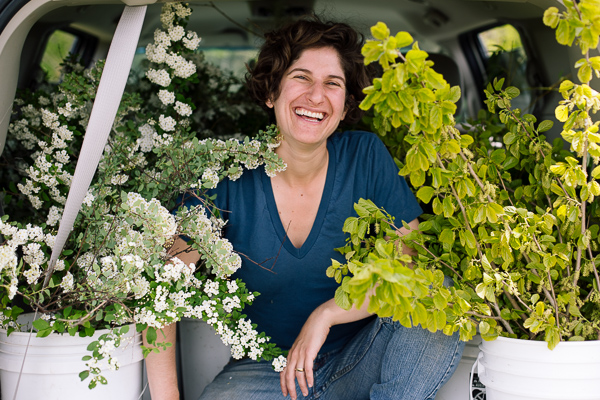
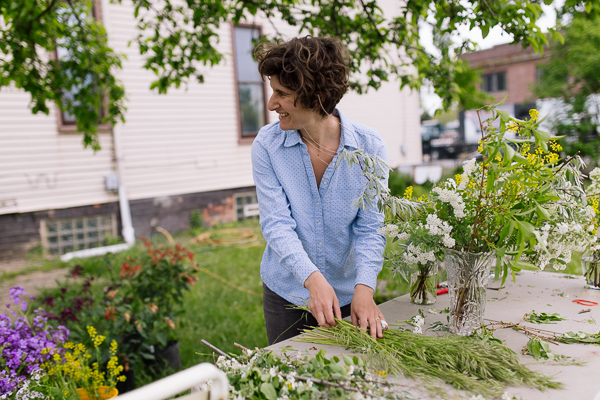
Most of the flowers grown at Fresh Cut Detroit‘s farm in Detroit’s Woodbridge neighborhood have yet to bloom. But that hasn’t slowed down business for owner Sarah Pappas.
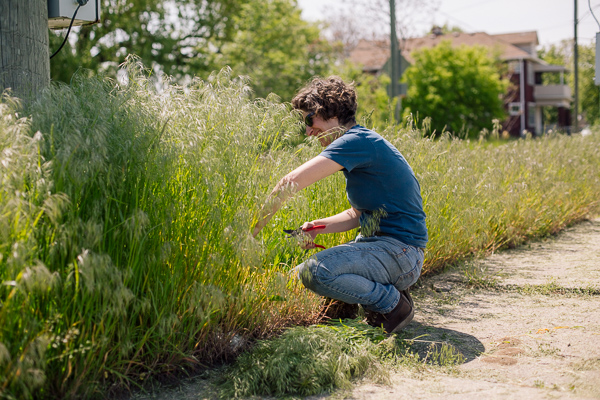
That’s because, during the early spring, Pappas forages for the majority of the stems she puts in her bouquets. With so much land for plants to flourish, much of which isn’t regularly mowed, Detroit has a unique and varied collection of flowers.
“It would be difficult to do what I do in other cities,” says Pappas.
Model D followed Pappas during one of her foraging excursions and learned a great deal about Detroit’s ecosystems, interacting with strangers, flower botany, and more. Interspersed are tips from Pappas for making your own foraged bouquet.
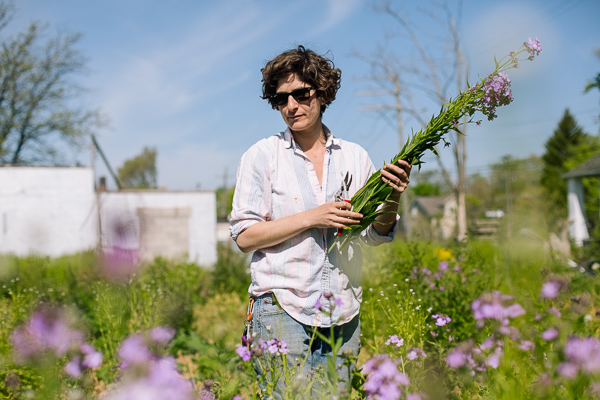
We first spoke at length about the ethics of foraging. Pappas is cognizant of how her actions can be interpreted, and what it means for her to go into an neighborhood with wild plants in order to cut, take, and sell its flora. She even wrote a post about her thoughts on this topic for the website Field to Vase.
Pappas engages everyone she encounters, asking if they think anyone would mind if she cut nearby flowers. Part of this is out of respect. Another is that it looks funny for someone to be collecting flowers on an overgrown lot or next to a freeway onramp. But most importantly, she wants others to recontextualize the beauty that’s everywhere in Detroit.
“I hope they develop a new valuation of what’s here,” says Pappas. “Flowers are a status indicator for a lot of people, but they needn’t be.”
Pappas also notes, “There’s no uncomplicated way to get flowers. If it’s not grown locally, it’s likely imported.”
With that in mind, we headed out in Pappas’s white minivan filled with buckets containing shallow water for storing flowers.
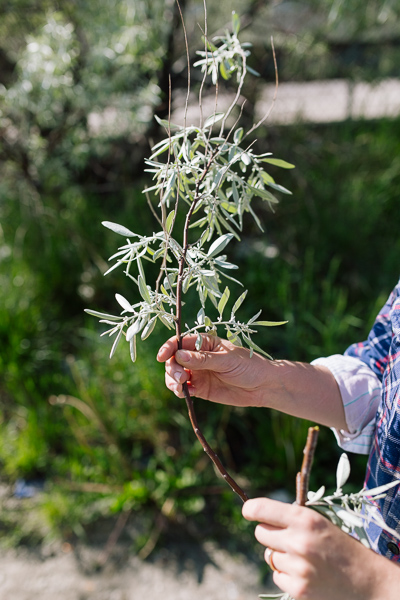
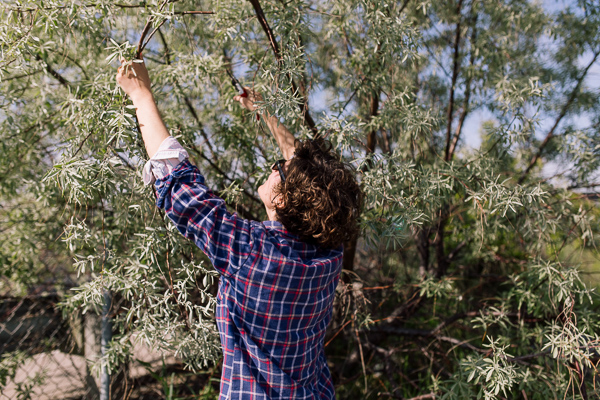
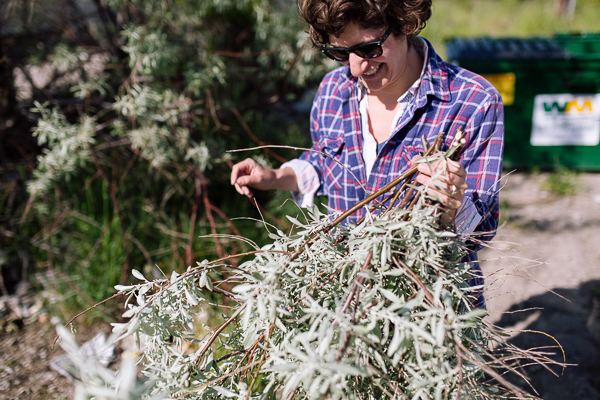
Pappas made her first stop after spotting a green and silver bush hanging over the fence of a freeway onramp. “I’m honestly not sure what this plant is called,” she admitted.
Its leaves, which are reminiscent of sage, are interspersed with tiny, spherical buds. “They look like a seeded eucalyptus plant when strewn about,” said Pappas. “They’re very popular for weddings these days.”
Most of our stops during the day were like this—impromptu and spurred by something that caught Pappas’s attention.
Just like our next stop at a patch of grass and trees next to a freeway service drive. Here, Pappas collected spirea (bridal veil), which is similar to the popular baby’s breath.
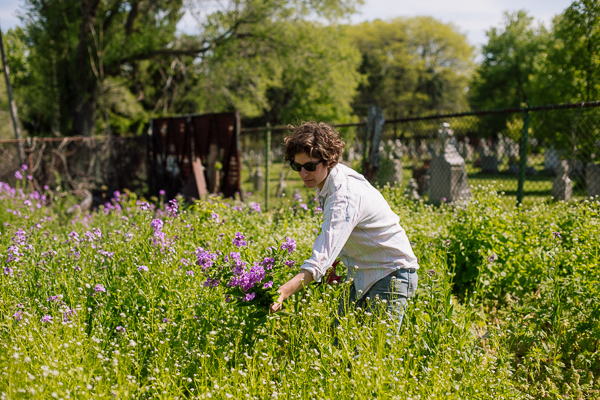
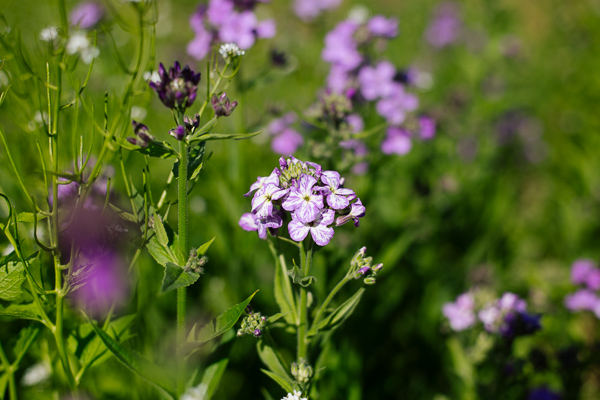
While foraging in a lot overgrown with dame’s rocket, Pappas spotted a few
mutant stems. The normal variety of this flower has all purple petals. The mutants, however, had petals with white spots. It looked gorgeous, especially
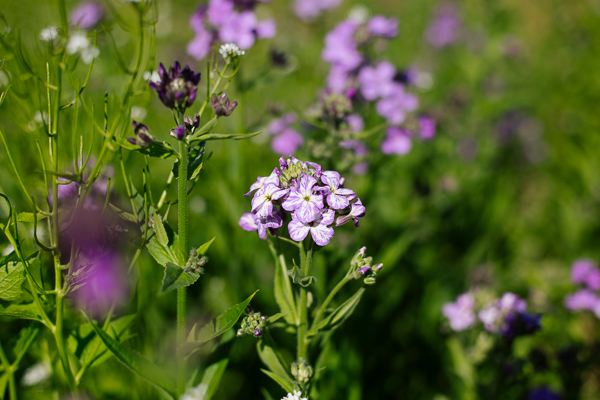
among the field of dominant purple flowers, but Pappas didn’t cut it—she’s always careful to leave plenty of blooms for others to enjoy.
“Maybe it will spread next year and the mutant patch will grow,” said Pappas.
She marked this plot in her journal so she could check on it next spring. It’s one way Pappas stays current on Detroit’s ever-changing flora. “What got mowed recently? What does the notebook from last year say? It takes a lot of work—the landscape changes every week.”
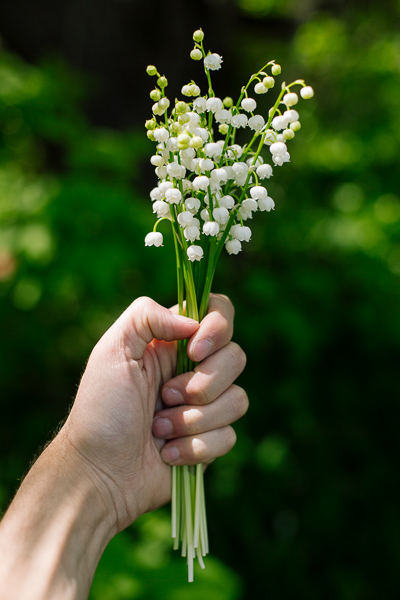
Later, Pappas went to cut some branches from a willow tree, and found a special plant nestled in the tree’s shade: lily of the valley. There’s a lot to like about this attractive flower—its white petals form a bell-like shape and its sweet fragrance is better than any perfume or soap.
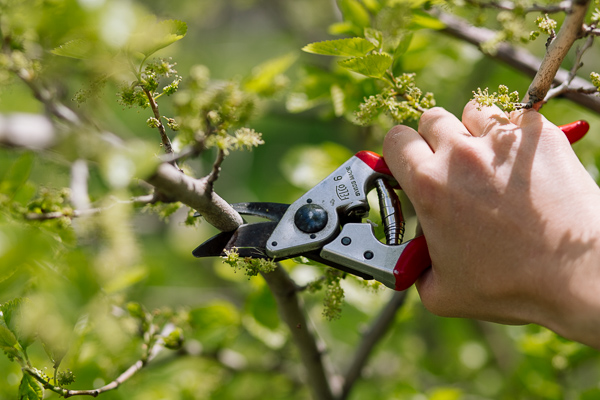
She also ended up taking some branches from the willow tree. “They add height and texture and make the arrangement look luxurious.”
At the next stop, Pappas got branches from a mulberry tree with unripened berries. Mulberry trees are abundant in Detroit, but she chose this particular one because it was in an open field, getting lots of exposure to the sun and forming more berry clusters. “I have these in my alley, but it’s shadier so the visual impact isn’t as impressive,” she said.
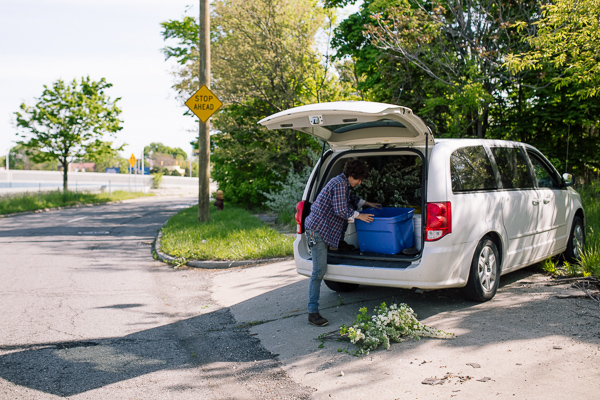
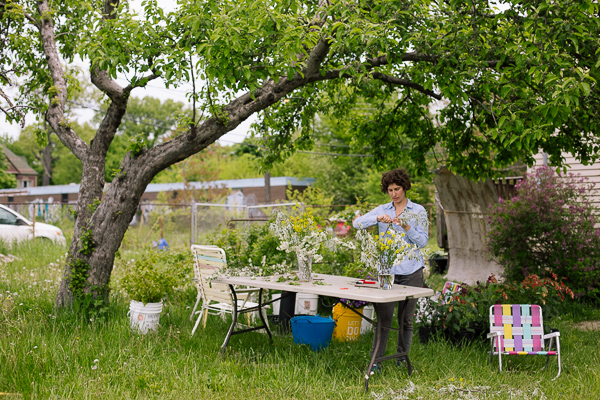
With every bucket in her trunk full of flowers, it was time to return to her farm for trimming and assembly. Pappas was prepping for a wedding the next day and still had a lot of work ahead of her.
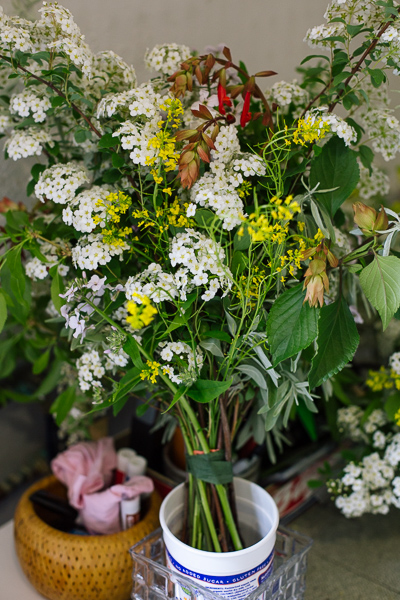
There’s much to consider when arranging a bouquet. Pappas chooses stems for their color, height, variety, the interests of her client, and theme of the event. “I’m also a designer, of sorts,” says Pappas. “Though I admit to knowing very little about formal design.”
In the end, Pappas’s bouquets end up looking unconventional, despite being composed largely of local plants. She’s made this the crux of her business, but it doesn’t suit everyone.
“If someone wants conventional flowers, I’ll recommend them to another seller,” says Pappas. “I’m very upfront about what I offer, and most of my customers like that I get flowers by the side of the freeway instead of flown in from a farm in Columbia.”
All photos by Nick Hagen.
Author

Related Articles

Michigan Adventurer to Bike 1,000 Miles Across State to Spotlight Hidden Form of Domestic Abuse
A Michigan adventurer is biking over 1,000 miles across both peninsulas this summer to raise awareness about economic abuse: a hidden form of domestic violence that affects countless survivors across Michigan.

Detroit schools are making real gains in reading and math: 4 strategies that are working
The city’s schools are making progress faster than peer districts, but that progress could be fragile.

From brunch to wellness, here are some ways to celebrate Mother’s Day in Detroit
From brunch and dinner specials to wellness and healing-centered experiences, several Detroit businesses are offering plenty of ways to celebrate Mother’s Day.